Property Hub
Live data
15 insights shared by the community.
What residents appreciate the most
Extensive infrastructure development, including new airports (Jewar), expressways (Dwarka, Yamuna), metro lines, and improved road connectivity, is a key catalyst for real estate growth across Delhi NCR. These projects enhance accessibility, reduce travel times, and attract both residential and commercial investments, creating new hotspots and increasing property values.
The Delhi-Dehradun Expressway is a game-changer, cutting travel time and attracting investors to Dehradun, showing how infrastructure drives demand beyond the immediate NCR.
Improved connectivity, like the Dwarka Expressway, makes living further out more feasible and boosts property values in those areas.
The upcoming Jewar International Airport and Film City are transforming Noida and Yamuna Expressway into major real estate hotspots, driving significant appreciation.
Infrastructure projects are vital. They open up new areas for development and make existing ones more desirable, leading to sustained real estate growth.
Dwarka's infrastructure, with its parks and recreational spaces, offers a balanced lifestyle, and new projects like the metro expansion further enhance its appeal.
Keep it clear, factual, and helpful for other residents.
Delhi continues to attract residents with its classic urban charm, rich legacy, and comfortable lifestyle. Posh areas offer abundant greenery, a sense of community, and convenient access to daily essentials, good cafes, and street food. Localities like Vasant Kunj, Dwarka, and Greater Kailash are highlighted for their amenities, parks, and overall quality of life, making them desirable residential locations.
Dwarka is incredibly green with numerous parks, making it ideal for families. The amenities and connectivity are also excellent.
For those who enjoy good cafes and street food, along with a vibrant social scene, South Delhi localities like GK and Green Park are perfect.
Posh areas like Gulmohar Park offer a secure, quiet environment with great community facilities and plenty of greenery, plus easy access to markets and metro.
Delhi still has that classic urban charm and offers a stable lifestyle, which is why many prefer it over other evolving cities.
Living in a farmhouse in South Delhi offers a unique experience with lush green surroundings, fresh air, and peace, a dream for many wealthy individuals.
Keep it clear, factual, and helpful for other residents.
The Delhi NCR real estate market has witnessed significant and rapid property price appreciation, particularly in emerging corridors like Dwarka Expressway and Gurugram's Sector 80 and Southern Peripheral Road. This growth, with some areas seeing prices soar by 79% in five years or 3.5x, offers substantial capital appreciation and attractive returns for investors. This dynamic market creates a favorable environment for real estate services facilitating transactions.
The Dwarka Expressway has seen property prices skyrocket by nearly 80% in just five years, making it a prime example of the incredible returns available in this market.
Yamuna Expressway and Noida Extension are still great bets for appreciation, especially with the upcoming airport and film city projects driving value.
Emerging areas like Gurugram's Sector 80 are quickly becoming luxury real estate hubs, promising significant appreciation due to robust infrastructure and natural beauty.
I bought a flat for 75 lakhs last year, and now it's worth 1.5 crores. If I hadn't invested then, I wouldn't be able to afford anything now.
We're seeing offers for properties double in just a couple of years. It's an insane market, and investors are holding out for even higher bids.
Keep it clear, factual, and helpful for other residents.
Non-Resident Indians (NRIs) are a major driving force in the Delhi NCR real estate market, especially in the luxury segment. They are actively investing, often buying properties for rental income or long-term appreciation, contributing significantly to demand and sales volumes. This strong external capital inflow provides a consistent buyer base for real estate services.
NRI investments are crucial, bringing in foreign currency and supporting the real estate market, even if it means higher prices for local buyers.
Many flats in my building are owned by NRIs who live abroad, using them as second homes or investments. They're a big part of the market.
Investing in India makes sense for NRIs, especially for rental income and long-term appreciation, even if we don't plan to live there ourselves.
The Indian diaspora is heavily investing in luxury homes near Delhi, accounting for a substantial portion of sales in new projects.
Keep it clear, factual, and helpful for other residents.
The Delhi NCR region, particularly South Delhi and Gurugram, is experiencing a robust and growing demand for luxury and ultra-luxury residences. Developers are successfully selling out high-value projects, sometimes even before construction begins, indicating a strong market for premium properties. This trend is driven by high-net-worth individuals and a general increase in income levels, making it a lucrative segment for real estate services.
It's incredible how quickly luxury apartments are being snapped up in NCR, even before they're built. Clearly, there's a strong appetite for high-end living.
Wealthy individuals are definitely splurging on luxury homes, driving up sales and making this a very active market for premium properties.
The Delhi NCR market is consistently leading in luxury property sales, capturing a significant share of India's high-end real estate. This shows a vibrant segment for specialized services.
We've seen a 25% year-on-year growth in housing sales in Delhi's real estate market, especially in the luxury sector. The demand is undeniable.
Keep it clear, factual, and helpful for other residents.
Where residents want improvements
Property prices in Delhi NCR, particularly in Gurugram and South Delhi, have become astronomically high, making homeownership unattainable for the average person. Even for those with substantial budgets, independent houses in posh areas are out of reach, with only builder floors or apartments being feasible. This rapid escalation is seen as a 'bubble' by many, leading to widespread frustration and a feeling of 'paid more, got less.'
Even for top salary earners, buying a house in this market doesn't make sense anymore. It's just too expensive.
The dream of owning a home in Gurgaon is shattered; prices have skyrocketed beyond what any common person can afford.
I can't believe a flat in Mumbai can cost 70-80k per sq ft, or even 1.25 lakh per sq ft in prime locations. It's unbelievable.
It feels like 1 crore is the new 50 lakh. You pay so much, but get so little in return, especially in Tier-1 cities.
With a budget of 5-10 crores, you can barely get a builder floor in a posh Delhi area, let alone an independent house or villa.
Keep it clear, factual, and helpful for other residents.
For buyers seeking independent houses or villas in Delhi's posh localities, options are extremely limited and often beyond even high budgets (e.g., 5-10 Cr). The market is dominated by builder floors and apartments, with plots for independent construction being scarce and prohibitively expensive. This forces buyers to compromise on their preferred property type or look outside prime Delhi.
Many are suggesting Gurgaon or Noida for independent houses because Delhi's prime areas are just too expensive for villas.
In South Delhi, a 100 sq yard plot alone can cost 5-7 crores, making a full house in that budget unrealistic. You're looking at 12-16 crores minimum.
Even in areas like CR Park, finding a 100 sq yard plot for an independent house is tough, and prices are still very high.
You won't find an independent house in a good locality for 3.5-4 crores; even new 4BHK builder floors are pushing that limit.
I want an independent house, but even with a significant budget, it's impossible to find one in posh Delhi areas. Only builder floors are available.
Keep it clear, factual, and helpful for other residents.
The real estate market in Delhi NCR is heavily skewed towards investors, including NRIs and high-net-worth individuals, who purchase properties for capital appreciation or rental income rather than for self-occupancy. This investor-heavy dynamic leads to artificial price inflation, reduced inventory for genuine end-users, and a market where properties are held for speculative gains, making it challenging for common people to find affordable homes.
Many properties are bought by investors who just want to flip them or rent them out, not live in them. This inflates prices for everyone.
It's hard for young professionals to enter the housing market when properties are being bought up by investors and rented out at exorbitant rates.
The market is so investor-heavy that genuine homebuyers are struggling to find properties at reasonable prices. It's all about speculation now.
NRIs are investing in properties primarily for rental income and appreciation, not necessarily to reside in them, which contributes to the high demand.
The market is driven by investors who can hold properties, preventing prices from dropping even when there's a surplus of units.
Keep it clear, factual, and helpful for other residents.
A significant concern is the pervasive role of black money and corruption in inflating real estate prices across India, including Delhi NCR. Many believe that ill-gotten gains from politicians, bureaucrats, and criminals are being parked in properties, artificially driving up values and making the market opaque. This makes it difficult for legitimate buyers and contributes to wealth inequality.
Politicians and bureaucrats are seen as using real estate to stash their wealth, manipulating prices and making it harder for ordinary citizens.
Corruption leads to wealth inequality, allowing a few to buy multiple assets with black money and artificially inflate prices.
The lack of digital property details makes it difficult for tax authorities to trace transactions, facilitating the use of black money in real estate.
Real estate is often used as a safe haven for black money, with transactions sometimes involving a significant cash component.
Black money is widely believed to be the primary driver behind the inflated real estate prices, making it an unfair market.
Keep it clear, factual, and helpful for other residents.
There is a prevailing concern among some market observers that the current high property prices in Delhi NCR might be an unsustainable bubble, potentially leading to stagnation or a market crash. While some believe prices rarely fall significantly, others point to past periods of stagnation (e.g., 2010-Covid in Gurgaon) and the disconnect between prices and average incomes as indicators of an impending correction.
The current upward trend in real estate might be followed by a downward trend in a few years, as end-users won't be able to afford the high prices.
Gurgaon's market was stagnant from 2010 until Covid, which is effectively a loss of value. The current inflation feels unsustainable.
Many hope for a market crash like in China or America to bring prices down to a reasonable level, but it feels uncertain.
I'm trying to sell my plots, but there's no liquidity. What's the point of high prices if you can't convert them to cash? It feels like a bubble.
Keep it clear, factual, and helpful for other residents.
Despite ongoing infrastructure development, many areas in Delhi NCR, including some posh localities, suffer from severe traffic congestion, overcrowding, and inadequate parking facilities. This impacts daily commute, quality of life, and overall urban experience, making certain areas less desirable for residents seeking peace and convenience.
South Ex is extremely overcrowded with awful entry and exit points, making it a frustrating experience to navigate.
I left my old locality because of the constant traffic jams and lack of parking. It just wasn't peaceful anymore.
Living in Tier-1 cities means paying crores for convenience, but you still get congestion and traffic. It's a trade-off.
Posh areas like GK are cool, but the roads are terrible, and finding parking is a nightmare. The constant noise is also an issue.
Keep it clear, factual, and helpful for other residents.
Pollution, particularly air pollution, is a significant and persistent environmental concern in Delhi NCR. This issue negatively impacts the quality of life and health of residents, raising questions about the long-term desirability of investing in properties in a 'polluted concrete jungle.'
It's hard to justify investing crores in a property when you're living in a polluted concrete jungle. The air quality is a major concern.
Rising pollution and endless traffic are making us question if Delhi is truly the right place for our family's future.
The pollution in Delhi NCR is a serious problem, and it's unlikely to be rectified in our lifetime, impacting the long-term livability of the region.
Keep it clear, factual, and helpful for other residents.
There are concerns about general crime, including theft and robbery, and issues with law and order in Delhi. This impacts the sense of safety and security for residents, making it a consideration when choosing a residential area.
There are ongoing issues with disputed properties and alleged corruption, which raises concerns about the overall law and order situation in certain areas.
Delhi has a reputation for crime, with reports of theft and robbery. It's a major factor when deciding where to live.
Keep it clear, factual, and helpful for other residents.
The real estate sector, despite regulations, is perceived to lack transparency, with brokers and agents sometimes engaging in deceptive practices. These include creating artificial scarcity to pressure buyers into quick decisions, standardizing high property rates, and misrepresenting market data. This behavior can lead to distrust and make it difficult for buyers to make informed decisions.
Agents often create a false sense of urgency, claiming most units are sold out, only to call back weeks later with the same 'scarce' inventory. It's hard to trust them.
It seems brokers and builders standardize high rates, then adjust the per-square-foot cost by reducing the area, rather than reflecting true market demand.
Keep it clear, factual, and helpful for other residents.
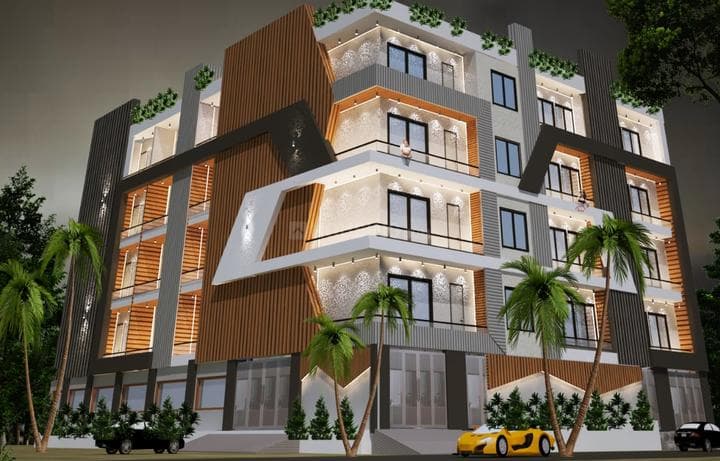
Builder floors, often considered an alternative to independent houses, are criticized for their construction quality. Issues include the use of cheap or low-quality materials, leading to frequent maintenance problems, inadequate plumbing (slow water flow), and unsafe electrical installations (e.g., lack of earthing, exposed wires). Builders are perceived to prioritize quantity and quick delivery over long-term durability and safety.
Builder floors often use cheap materials to maximize profit. I experienced constant maintenance issues, slow water flow due to small pipes, and even unsafe wiring without proper earthing.
Keep it clear, factual, and helpful for other residents.